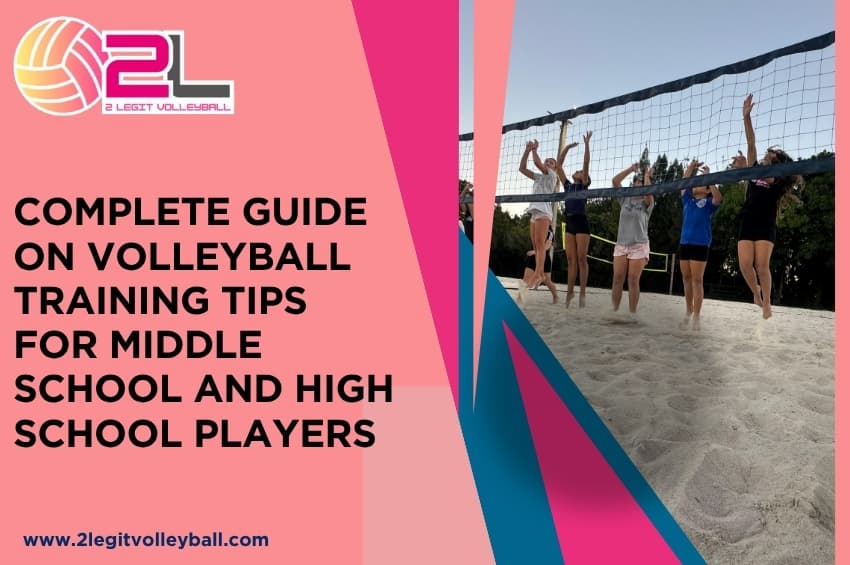
Complete Guide on Volleyball Training Tips for Middle School and High School Players
Build strong fundamentals for long-term success on the court
At 2 Legit Volleyball Academy, we trust that players cultivate their best when they focus on strong essentials, compatible practice, physical conditioning, and psychological training. Middle school and high school players are at an important stage in their powerful development.
The habits they build promptly can shape their future performance in school groups, club competitions, waterfront volleyball tournaments, and even college-level volleyball. With the right development approach, young players can improve their confidence, technique, and overall game understanding.
Here are a few of the ultimate volleyball training tips for junior professionals, which are going to improve their performance on the court.
Focus on Mastering the Fundamentals
One of the most considerable mistakes young athletes make is trying to learn leading skills before learning the basics. Strong fundamentals are the groundwork of every favorable volleyball player.
Players of our best volleyball academy in Miami should usually work on:
- Passing
- Serving
- Setting
- Hitting
- Blocking
- Defensive standing
Footwork Improvement
Athletes who move capably can:
- Reach balls faster
- Maintain better balance
- Transition quickly between offense and justification
- Improve court coverage
- React more effectively all along rallies
Middle school and high school contestants should regularly perform agility drills like:
- Ladder drills
- Cone drills
- Side shuffles
- Sprint intervals
- Quick reaction exercises
Good change skills help contestants become more confident and reduce unnecessary mistakes, all the while in the games.
Develop Strong Communication Skills
Volleyball is a team sport that depends laboriously on communication. Many points are extinct because players fail to call the ball or write defensive assignments.
Young players should practice:
- Calling “mine”
- Communicating watchful coverage
- Alerting teammates about blockers
- Encouraging partners during difficult importance
Build Strength Safely
- Bodyweight exercises
- Core substance
- Balance training
- Flexibility
- Mobility work
High school athletes can evenly incorporate:
- Resistance preparation
- Plyometrics
- Jump training
- Speed development
- Endurance conditioning
A strong and trained athlete can jump higher, move faster, and lower injury risk throughout intense competition.
Practice Serving Consistently
Serving is one of the few volleyball abilities fully controlled by the performer. A strong defense can immediately put pressure on adversaries and create scoring opportunities.
Young athletes should practice:
- Float serves
- Overhand serves
- Jump serves (for advanced performers)
- Serve placement
- Consistency under pressure
Vertical Jump Improvement
However, improving vertical jump demands a proper method and conditioning. You can also join our beach volleyball camps in Miami.
Athletes can improve jumping performance through:
- Squat jumps
- Box jumps
- Lunges
- Calf strengthening exercises
- Core training
- Plyometric workouts
Proper landing procedures are equally important because poor harbor technique increases harm risk. Young athletes should focus on controlled change rather than simply jumping as high as possible.
Watch and Learn From Competitive Volleyball
One underrated training method is watching high-ranking volleyball matches. Observing experienced performers helps young athletes appreciate:
- Court positioning
- Offensive systems
- Defensive blueprints
- Communication patterns
- Transition movements
Train Mental Strength
Mental toughness preparation includes:
- Staying concentrated after mistakes
- Maintaining positive body language
- Handling competitive pressure
- Supporting partners
- Staying disciplined during practice
Recovery and Rest
In reality, recovery is equally important. Without proper improvement, athletes may experience:
- Fatigue
- Reduced performance
- Increased harm risk
- Burnout
- Mental exhaustion
Young volleyball players should prioritize:
- Proper sleep
- Hydration
- Stretching
- Recovery days
- Balanced food
Defensive Skills
Many younger players focus mainly on hitting and scoring, but powerful defensive performers are equally valuable.
Athletes should train:
- Digging
- Defensive arranging
- Reading hitters
- Reaction time
- Floor evolution
- Serve receive
A player with strong protective skills can become a detracting asset to some volleyball team. Defensive consistency frequently creates more convenience for offensive success.
Learn Proper Volleyball IQ
Athletes can improve their volleyball IQ by training:
- Rotations
- Court spacing
- Offensive structures
- Blocking strategies
- Defensive formations
- Situational in charge
Set Goals
Goal background helps athletes stay motivated and measure progress. Instead of meeting only in winning tournaments, young performers should create achievable development aims.
Examples include:
- Improving serve accuracy
- Increasing vertical jump
- Reducing passing wrongs
- Improving communication
- Building endurance
Tracking progress helps competitors stay committed and understand improvement over time.
Consistent Training
Athletes should create organized training routines that involve:
- Team practice
- Individual skill work
- Strength preparation
- Recovery sessions
- Mental preparation
Even short regular practice sessions can produce main long-term improvement when finished consistently. At 2 Legit Volleyball Academy in Miami, we stress long-term development instead of quick results cause sustainable progress creates more powerful athletes.
Learn to Accept Coaching
Coaching response is essential for growth. Young athletes occasionally become frustrated when corrected, but constructive teaching helps players advance faster.
Successful athletes learn to:
- Listen cautiously
- Apply corrections
- Ask questions
- Stay coachable
- Remain available for learning
Athletes who deal with feedback frequently progress more quickly than those who withstand instruction.
Participate in Competitive Training Environments
- Club volleyball
- Volleyball camps
- Position-particular training
- Beach volleyball programs
- Tournament competition
Exposure to bigger competition levels helps professionals prepare for advanced freedom in the future.
Nutrition Matters for Performance
Nutrition straightforwardly impacts energy, recovery, and powerful performance. Young players should fuel their bodies correctly before and after preparation.
Important nutrition habits involve:
- Eating balanced food
- Staying hydrated
- Consuming enough protein
- Avoiding excessive junk food
- Refueling after workouts
Balance Academics with Game
Good habits involve:
- Creating study schedules
- Prioritizing sleep
- Staying organized
- Managing stress
- Communicating with coaches and teachers
Athletes of our Miami volleyball academy who uphold strong academic performance frequently have more opportunities at the learning level.
Contact Us
Volleyball advancement takes time, capacity, and devotion. Middle school and high school competitors who focus on essentials, adaptation, ideas, and mental determination position themselves for unending benefit both intermittently on the court.
For further information, you can contact our experts at the 2 Legit Volleyball Academy in Miami.